Local Government Reorganisation
The government has announced a pause in LGR and will be undertaking a rapid review of the LGR process and decisions. You can read more here: Review of local government reorganisation launched - GOV.UK
Ribble Valley Borough Council is set to be abolished in the biggest shake-up of local government in over 50 years.
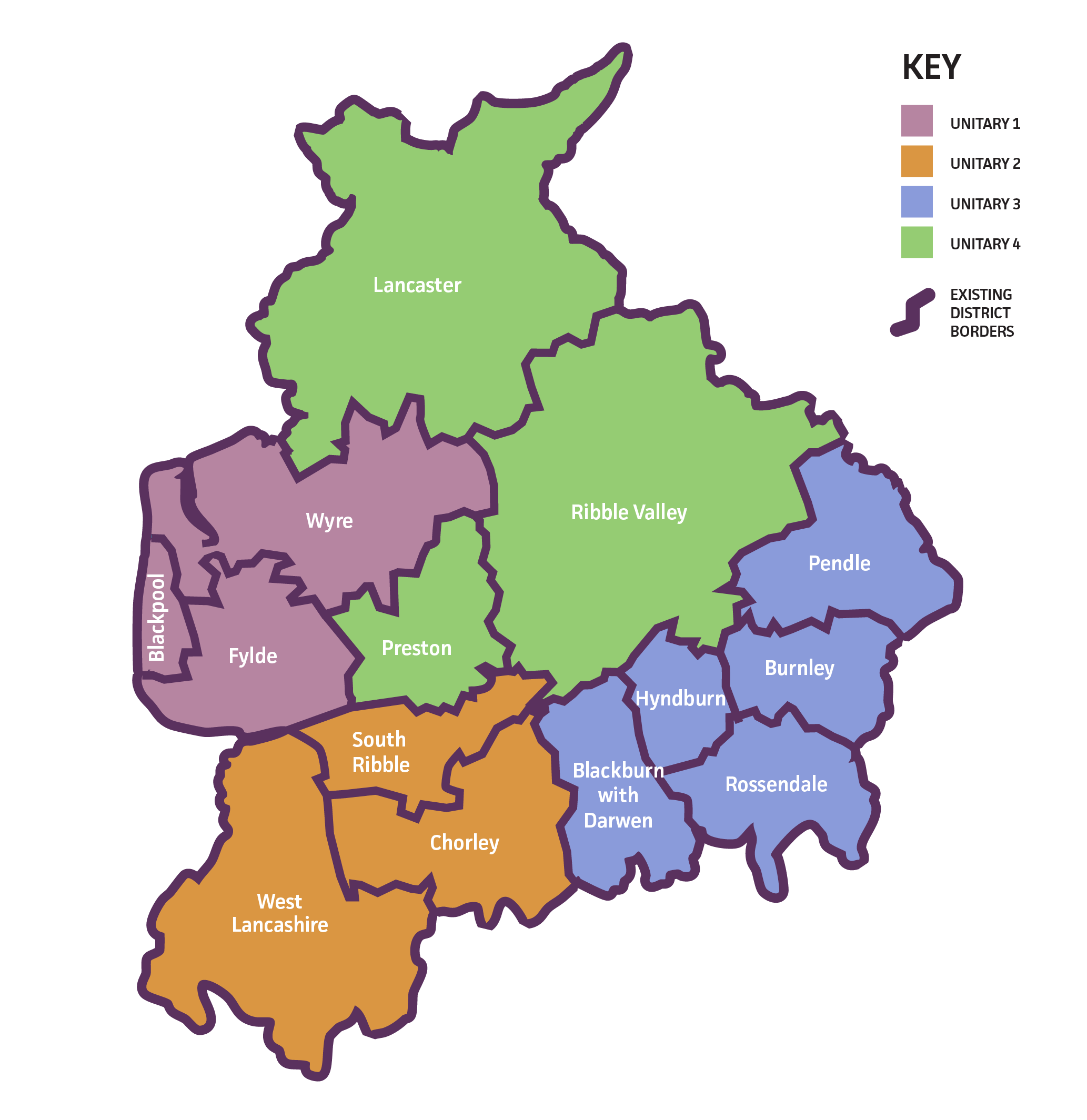
The Government asked Lancashire authorities to draw up plans for a substantial reduction in the number of councils in the county, from 15 to a small number of unitary authorities responsible for delivering all services from education and social care to emptying your bins and looking after your local park.
Four new councils for Lancashire
The Government has announced its preferred option for Local Government Reorganisation (LGR) in Lancashire.
Subject to Parliamentary approval, four new councils will be created to replace the current 15 councils. Ribble Valley Borough County will join with Preston and Lancaster City Councils to create a new unitary authority. The new arrangements will be legally confirmed only once a Structural Change Order is made.
This means that residents in the Ribble Valley area will, from April 2028, be served by a new authority which will also cover Preston and Lancaster.
For now, it is business as usual. There are no immediate changes to services. Residents should continue to access support in the same way as they do now. Our focus remains on keeping services running smoothly and supporting our communities.
Local Government Reorganisation is about changing how councils are organised, not how people use services day to day. In the future, the new unitary councils will bring services together under a single organisation, making it simpler and more joined-up for residents.
This is a phased, long-term process. The new unitary councils are expected to take on responsibility for services in April 2028. This allows time for careful planning to ensure a smooth and well-managed transition.
We understand that people may have questions about what this means. We are committed to being open, honest and transparent, and we will continue to share updates as more information becomes available.
Our Name. Our Heritage. Our Council.
The Government has confirmed, subject to Parliamentary approval, that Lancaster, Preston and Ribble Valley will come together as one of four new unitary council areas in Lancashire. As plans for the new council move forward, its name matters. It should be clear, familiar and reflect the places and communities it will proudly represent.
That is why Lancaster City Council, Preston City Council and Ribble Valley Borough Council are standing together and calling for the new authority to be named Lancaster, Preston & Ribble Valley Council.
So far in the process the name North Lancashire has been used as a working title, but we feel that Lancaster, Preston & Ribble Valley Council better reflects our history and ambitions.
Place is personal. The names Lancaster, Preston and Ribble Valley reflect where people live, belong and take pride in their communities. That identity should not be lost when council structures change.
These familiar place names also help visitors, employers and investors understand the area and the opportunities it offers.
Lancaster and Preston are Lancashire’s only cities with a strong history and economic hub, while Ribble Valley is known for its towns, villages, countryside and visitor economy. Together, their names reflect the character of the new council area.
What happens next?
May 2027 – Elections take place for the new (shadow) councils
April 2028 – The new unitary councils officially launch and existing councils cease to exist